

There are few sounds more unsettling for a driver than the sharp bang of a tyre letting go at highway speed. One moment you are cruising along at 100 km/h, and the next your car is pulling hard to one side, the steering wheel is shuddering in your hands, and a rhythmic flapping noise is coming from somewhere beneath you.
A busted tyre on the road is frightening, but it doesn't have to end in disaster. With the right knowledge, a calm response and a little preparation, most blowouts can be managed safely.
This guide covers why tyres fail, exactly what to do when it happens, and how to minimise the chances of it happening to you in the first place.
Why Tyres Fail on Australian Roads
Australian driving conditions are tough on tyres. Long stretches of highway, scorching summer temperatures and remote country roads all put extra stress on rubber that is already working hard. While some failures come out of nowhere, most blowouts have a recognisable cause.
Under-inflation is one of the most common culprits. A tyre running low on air flexes more than it should, which builds up heat in the sidewalls until the structure gives way. Overloading has a similar effect, which is why families heading off on holiday with a packed boot, roof pod and caravan in tow need to be especially careful.
Other frequent causes include impact damage from potholes and kerbs, slow punctures that go unnoticed for days, worn tread, and simple old age. Rubber deteriorates over time even when a tyre looks healthy, so a tyre with plenty of tread left can still be a risk if it has been sitting on the car for many years.
What to Do the Moment a Tyre Bursts
Your instincts will almost certainly tell you to stomp on the brake. Resist that urge. Sudden braking shifts the vehicle's weight onto the damaged tyre and can cause you to lose control entirely. Instead, follow these steps:
1. Stay calm and hold on firmly. Grip the steering wheel with both hands. A front tyre blowout will pull the car towards the damaged side, while a rear blowout tends to make the back end sway.
2. Keep the car pointing straight. Make small, steady corrections rather than sharp turns. Jerking the wheel is one of the main reasons blowouts turn into rollovers.
3. Don't slam on the brakes. Keep your foot steady on the accelerator for a moment to help the vehicle maintain its momentum and stability.
4. Ease off gradually. Once you have control, slowly lift off the accelerator and let the car lose speed naturally.
5. Brake gently once you've slowed down. When the car is travelling at a much lower speed, apply the brakes lightly and progressively.
6. Indicate and move left. Signal your intention and steer smoothly towards the shoulder or the nearest safe stopping area.
7. Stop well clear of traffic. It's better to drive slowly on a ruined tyre for a short distance than to stop in a dangerous spot such as a blind bend or a narrow bridge.
Seeing a blowout in action can make these steps much easier to remember. This video demonstration of a steer tyre blowout shows how a vehicle reacts when a front tyre fails and why a steady, controlled response matters so much.
Getting Off the Road Safely
Once the car has stopped, your priority shifts from controlling the vehicle to protecting yourself and your passengers. Switch on your hazard lights straight away. If you carry a warning triangle, place it a good distance behind the car so approaching drivers have time to react.
Get everyone out of the vehicle on the side away from traffic, and wait behind a barrier or well off the road if possible. On a busy freeway or a narrow shoulder, don't attempt a roadside tyre change. Call your roadside assistance provider instead and wait somewhere safe. Your safety is worth far more than the time saved.
Flat Tyre or Blowout? Knowing Your Repair Options
Not every tyre problem is a full blowout. Many drivers experience slow punctures or flats caused by a nail or screw in the tread. In these cases, you usually have a few options.
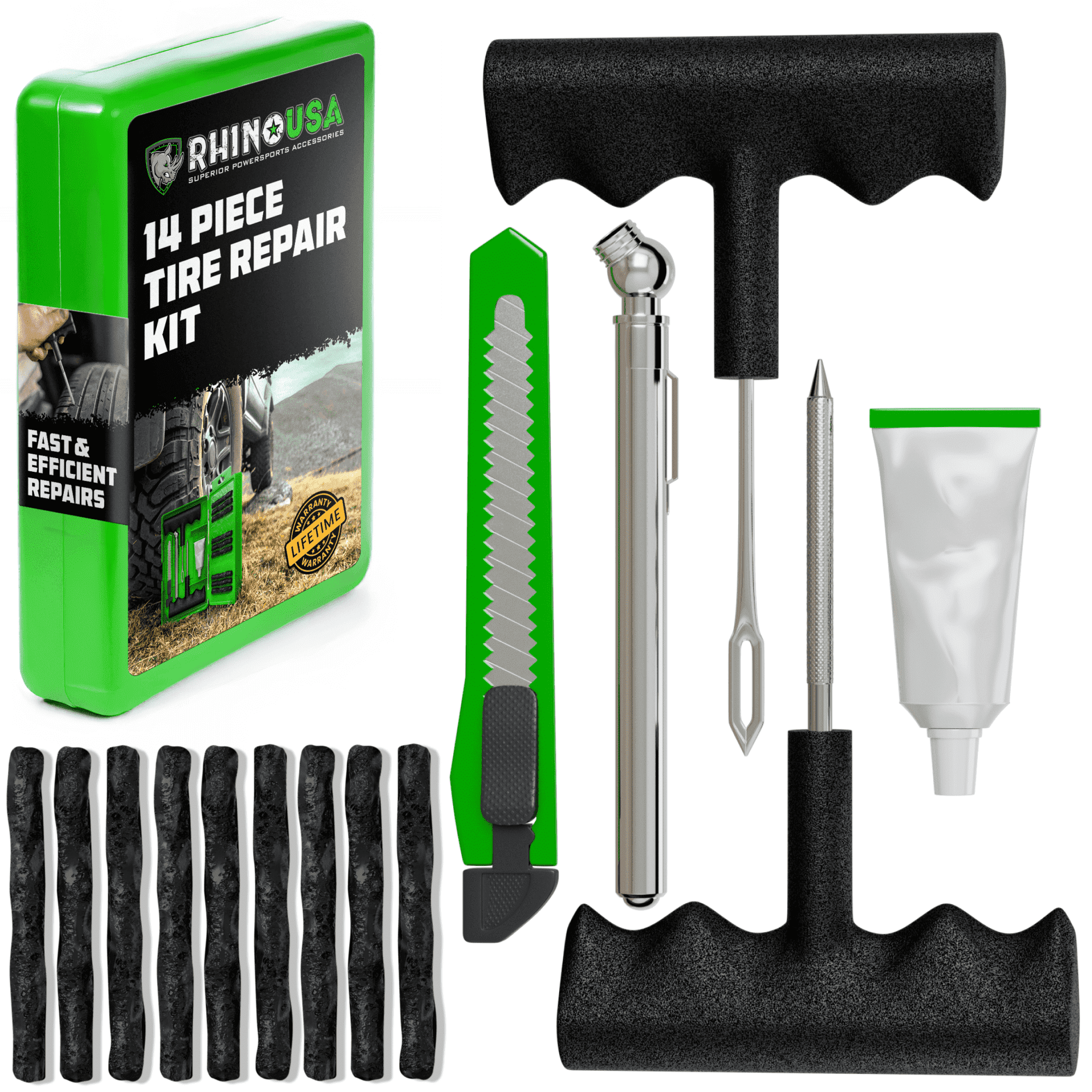
The traditional solution is to fit your spare. However, many newer cars come with a space-saver spare or no spare at all, which makes a quality tyre repair kit an essential item to keep in the boot. A good kit allows you to plug a tread puncture and reinflate the tyre, getting you back on the road and to a tyre shop without waiting hours for help.
This is particularly valuable for four-wheel drivers, tourers and anyone travelling through remote areas where mobile reception is patchy and help could be a long way off.
It is important to understand the limits of a roadside fix. A repair kit is designed for punctures in the tread area. A tyre that has burst, has a torn sidewall or has been driven on while completely flat for any distance usually can't be safely repaired and will need to be replaced. Any roadside repair should also be treated as temporary until a tyre professional has inspected it.
Prevention: Keeping Your Tyres Road-Ready
The best way to deal with a blowout is to avoid one altogether. Regular checks take only a few minutes and can make a real difference.
Check your tyre pressures at least once a month and before any long trip, using the figures on the placard inside the driver's door rather than the maximum printed on the tyre. Inspect each tyre for cuts, bulges, cracks or embedded objects, and don't forget to check the spare.
Tread depth matters too. The Victorian Department of Transport and Planning's VSI 16 – Tyre Maintenance and Repair guideline states that light vehicle tyres must have at least 1.5 mm of tread in all principal grooves, and that the tread must not be worn down to the point where the tread wear indicators touch the road. It also advises drivers to have a reputable tyre dealer examine any tyre they have doubts about. Tread wear indicators are small raised bars moulded into the grooves, so if your tread is level with them, it's time for new tyres.
Finally, respect your vehicle's load limits, have your wheel alignment checked regularly, and replace ageing tyres even if the tread still looks reasonable.
Final Thoughts
A busted tyre on the road is one of those situations every driver hopes to avoid, but knowing how to respond can turn a potential catastrophe into a minor inconvenience. Stay calm, keep a firm grip on the wheel, avoid harsh braking and get safely off the road. Combine that knowledge with regular tyre checks and a well-stocked boot, and you'll be ready for whatever the road throws at you.



0 Comments